
Two companies sell water in aluminum instead of plastic. One is called Open Water. The other is called Liquid Death.
Open Water made the safe choice, the one almost any founder would make. The name says what's in the can. The brand leans on purity and sustainability, recyclable cans and water it calls ultra-purified, and nothing about it asks for a second look. Its revenue has doubled every year since 2020 on under $4 million of funding, much of it sold through zoos and aquariums rather than supermarket shelves. But it has nothing like Liquid Death's cultural footprint. You may never have heard of it.
Liquid Death made the other choice. Its founder, Mike Cessario, went looking for what he called the dumbest possible name for a healthy drink, and he landed on Liquid Death. He put canned water in a heavy-metal costume and ran it under the tagline Murder Your Thirst. Plenty of people found the whole thing ridiculous. The market did not. By March 2024 the brand had reached a $1.4 billion valuation in a funding round, on about $263 million of retail sales the year before.
Both are real businesses. Only Liquid Death became a phenomenon, and it wasn't the loudness that got it there. What separated the two names is where each one sits on a single curve. That curve measures how far a name strays from what its category already sounds like. Open Water sat at the safe end. Liquid Death found the spot in the middle that most naming advice never mentions. That spot is what a polarizing name really is, a name that breaks the category's pattern by just enough to get noticed while staying easy to say.
Why founders reach for the safe name
Reaching for the safe name is the rational move, and the research explains why it feels right. People trust what they can process easily, and a name that reads at a glance feels safe before a buyer has thought about it at all. In a 2004 review in Personality and Social Psychology Review, Reber, Schwarz, and Winkielman pulled together the evidence. The easier something is to process, the more people like it, and the more they judge it to be true. So the pull toward an easy name is doing real work. A name a buyer can read and say without effort carries less friction into everything the brand does, every ad, every label, every time someone repeats it to a friend.
The easy name's edge is measurable too. In 2006, in the Proceedings of the National Academy of Sciences, Alter and Oppenheimer showed that newly listed shares with easy-to-pronounce names traded a little better than hard-to-pronounce ones in their first few days on the market. The edge was small and it faded within weeks. But at the moment of first contact, the easy name won.
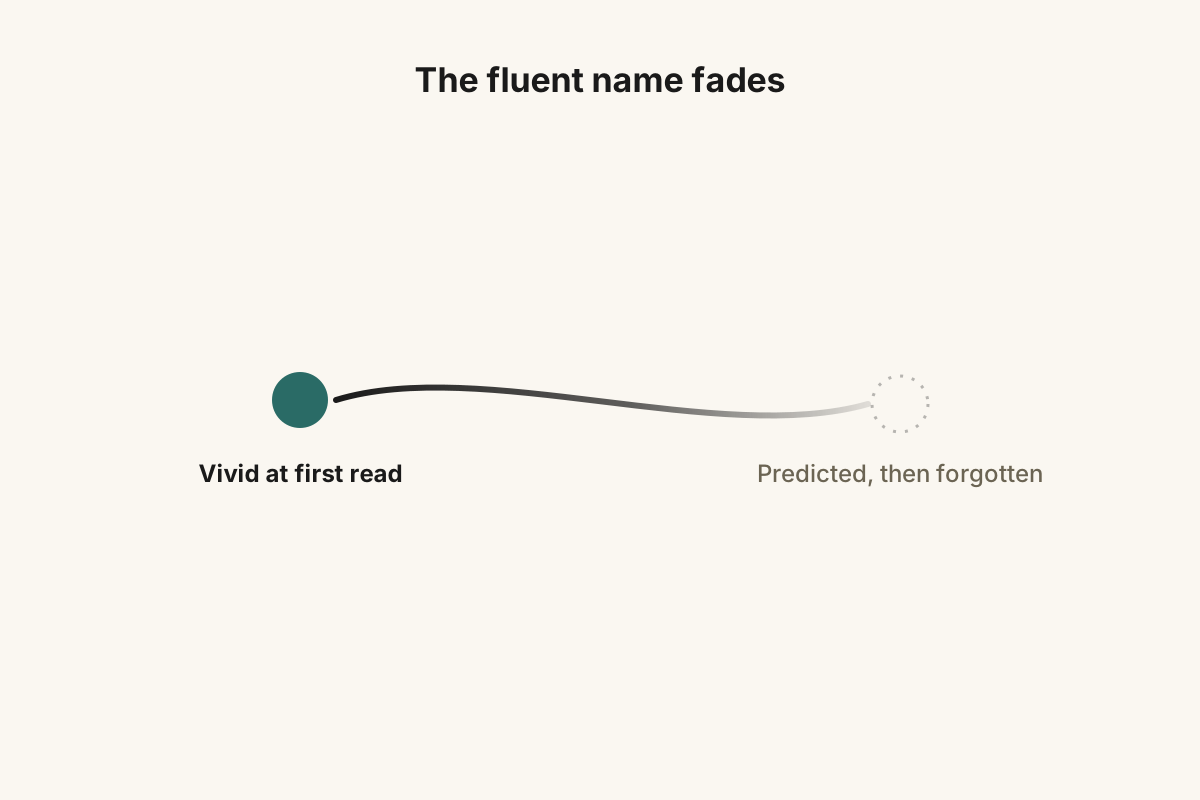
A name the mind reads at a glance is also the name it predicts and forgets. The vivid version fades to a ghost of itself.
Everything so far points toward the safe name. The catch is that founders hear easy and reach for expected, and easy and expected aren't the same thing. A name can be effortless to read and still vanish, because the same mind that reads it without effort also predicts it instantly. Line up ten skincare brands and most make the same soft, clinical promise in the same soft, clinical sounds, every one fluent and every one interchangeable. A name that matches what the category already sounds like inherits the category's invisibility. It clears every check on the founder's list and earns nothing. Nobody looks twice.
The curve behind the choice
A name's payoff doesn't rise in a straight line as it gets stranger. It climbs as the name pulls away from what the category trains a buyer to expect, reaches a peak, then drops once the name pulls so far away that it stops making sense. Too familiar, and the name gets predicted away. Too strange, and the buyer can't work out what it means. The reward sits in the middle, at a surprise the buyer can still resolve.
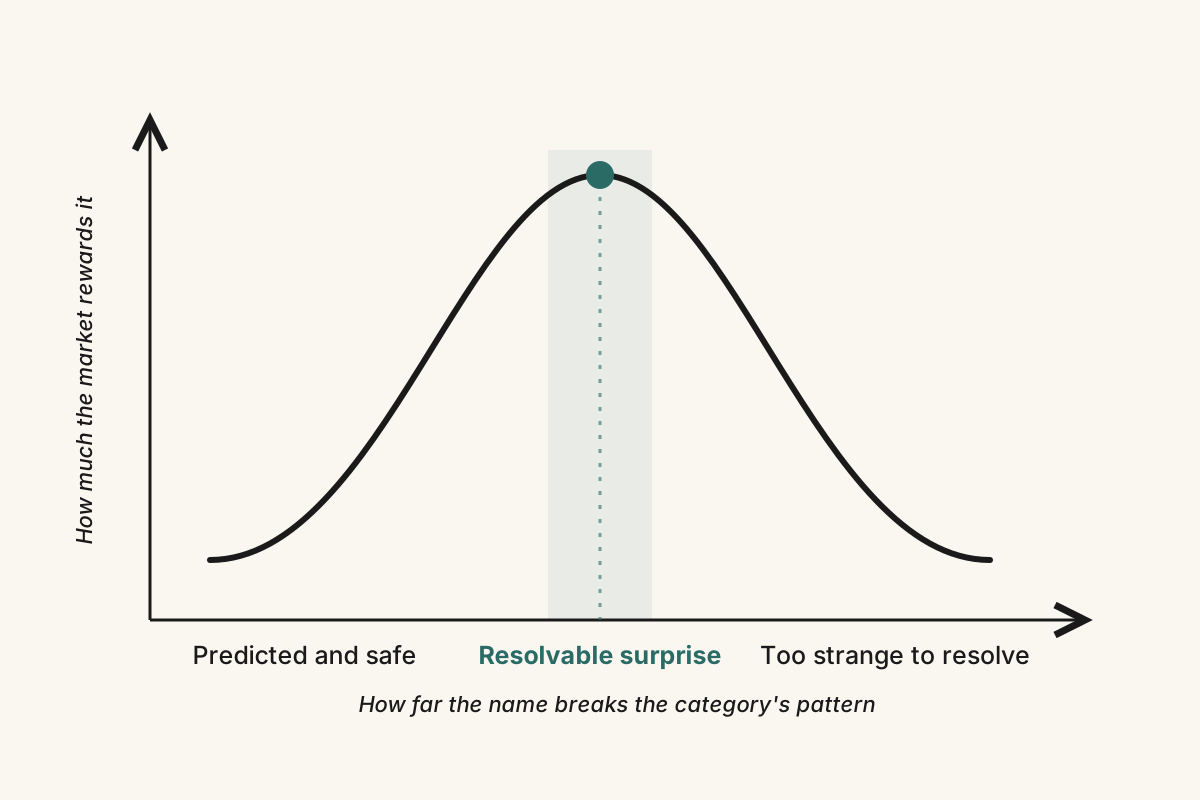
Reward climbs as a name departs from the expected, peaks at a surprise the buyer can still resolve, then falls when it gets too strange.
The evidence for the curve comes out of the consumer-research work on how people judge things that don't quite fit. In a 1989 paper in the Journal of Consumer Research, Meyers-Levy and Tybout tested how shoppers rated new products that matched their category to different degrees. Across three experiments, the winners were the products that were moderately incongruent, different enough to be interesting but still recognizable. They were judged more favorably than the products that were either perfectly expected or wildly off-category. That pattern follows the schema-congruity theory psychologists trace to George Mandler, which says the mind enjoys a small puzzle it can solve. A perfectly expected name sets no puzzle, a wildly strange one sets a puzzle with no answer, and the moderate case asks for a moment of work and then pays it back.
Those studies used products, not brand names, so naming borrows the principle by extension, and it holds only as long as the buyer can resolve the surprise. Push a name past what a buyer can resolve and the advantage flattens or reverses. The winning names are the ones whose surprise lands and clicks into place, and researchers call that sweet spot optimal incongruity.
Surprise the category, not the mouth
Hitting that sweet spot means keeping two things true at the same time. Easy-to-process names win, and the best names still break the category's pattern. Both hold at once, because a name can be surprising in one channel and effortless in another. Liquid Death is two ordinary English words. A child can read them, and the mouth runs through them without a stumble. The surprise isn't in the letters. It's in the meaning, in pairing death with a health drink in a category that has spent decades promising purity and freshness. The shock is semantic, and it resolves the instant you get the joke. So the name breaks the category's pattern hard while breaking no rule of pronunciation at all.
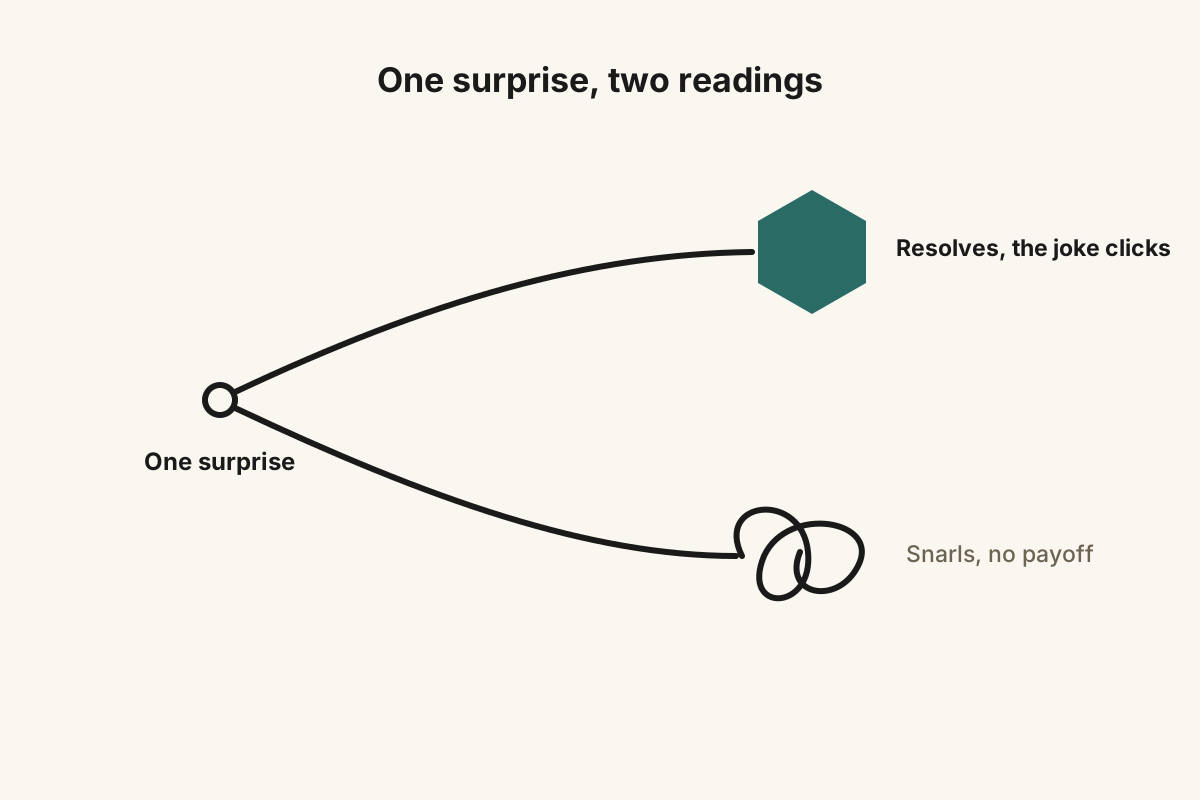
The same surprise can resolve into a clean whole or snarl into a tangle. The win is the reading that clicks.
The surprise is cognitive, not political. Liquid Death broke a naming convention, not a values taboo. Splitting an audience over what a brand believes is a different bet and a riskier one, and plenty of agreeable brands do quietly well without it. That isn't the move this piece is about. What's on the table here is only ever the sound of a name and the stance it takes.
None of this is specific to canned water or a heavy-metal act. Toilet paper is about as expected a category as naming gets, name after name built from soft, reassuring words. Who Gives A Crap broke the pattern with a name that's faintly rude and instantly readable, and it points at something real underneath, because the company gives half its profits to building toilets where they're scarce. The surprise sits in the meaning, the words stay easy, and the joke resolves into a mission instead of a stunt.
Move that surprise into the other channel and it fails. Put the strangeness in the spelling instead, an invented word studded with silent letters and unlikely clusters, and the buyer reads the difficulty itself as a warning. Song and Schwarz showed this in 2009 in Psychological Science. They gave people made-up food additives and amusement-park rides with names that were either easy or hard to pronounce. People rated the hard-to-say ones more harmful and more risky, an effect driven by how unfamiliar the names felt. A name nobody can pronounce doesn't read as daring. It reads as a hazard, and the buyer steps back without knowing why.
So be bold is too blunt an instruction. The useful version is to spend the surprise on the category, not on the tongue. Say the thing the category has been too careful to say, and keep every syllable easy to pronounce while you do it. Even then, Liquid Death's name was only the spark, not the whole engine. The breakout also rode the heavy-metal styling, the viral comedy, celebrity money, and years of fighting for placement in stores. What the name did was give all of that a banner worth looking at twice, instead of a label that slid past the eye unread. Whether a name is easy to say in the first place runs on its own mechanics, and the companion piece on sound symbolism covers them.
How far is too far
A surprise can miss the peak on the far side too, where it stops resolving. When Tribune Publishing renamed itself tronc in 2016, the word landed as a joke instead of a stance. It was built to stand for tribune online content, but no reader got there on their own, and the ridicule held until the company changed back to Tribune two years later. The tronc flop is the off-category tail the shoppers in the Meyers-Levy and Tybout experiments marked down, a surprise with friction and no payoff. When a stranger reads your name and just looks confused, the name has gone too far, not stayed too timid.
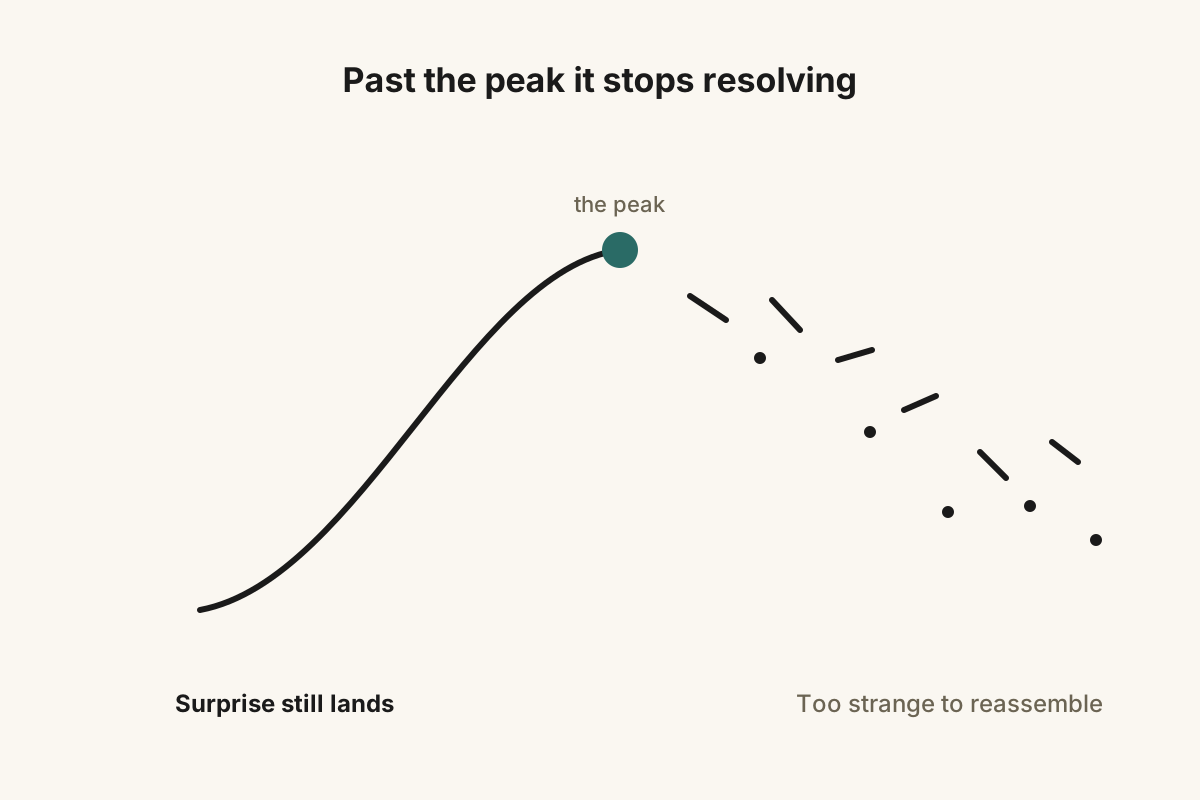
Push the surprise past the peak and it stops resolving. The line crests, then breaks apart into pieces a reader cannot reassemble.
There's a subtler failure too, the name that works as a surprise and still falls apart. The shock lands, the buyer gets it, and underneath there's nothing. A name that breaks the pattern only to break it is a gimmick. A gimmick has a short half-life. The jolt comes once and never comes back, because the surprise was never standing in for anything true about the brand. Liquid Death's stance connects to a real argument about how the drinks industry sells to people, so the death is carrying a point. Take the meaning out and a costume is all that's left. A quieter version of the same failure traps the cautious founder, whose name unsettles people without being bold enough to mean anything. It pays the cost of strangeness and collects none of the reward of conviction. A polarizing name only works if the brand commits all the way.
Placing your shortlist on the curve
Reading your own names on the curve starts with the category, not the shortlist. Before you can judge a single name, you have to know what expected sounds like, so pull up the ten brands a buyer would really compare you against and read their names in a row. The pattern surfaces fast, and once you can hear what expected sounds like you can set your own candidates against it.
Most candidates land in one of two failed spots. Some sound like a competent member of the category and nothing more. Those aren't finished names, they're raw material, and the work is to push each one toward a sharper stance until it earns a second look. Others go the opposite way and draw a shrug or a furrowed brow instead of a click, and those you cut, however much the wordplay pleases you. What you're hunting for sits in between the two. A stranger stops on it, gets the joke, and can still say it out loud on the first try.
One check is worth running before any money goes to trademarks or focus groups. Show the name cold, with no story attached, and watch what the stranger's face does. If the surprise lands and they can say it on the first try, the name is sitting near the peak. If they squint, it's gone over the edge. The fuller method behind this, and the other tests worth running on a finalist, lives in the companion guide on naming a brand.
Frequently asked questions
What is a polarizing brand name?
A polarizing brand name is one that breaks its category's naming pattern by just enough to get noticed, while staying easy to read and say. The surprise lands in what the name means, not in how it sounds, so a buyer gets it on the first read. In a water category built on words like pure and fresh, Liquid Death is the clearest example.
Is a polarizing brand name the same as a controversial brand?
No. The two split people in different ways. A polarizing brand name breaks a naming convention, so the surprise is cognitive, and it resolves the instant a buyer gets it. A controversial brand splits people over what it believes or does, so the surprise is political, and it may never resolve. This piece is only about the first kind, a name that takes a sharp stance in sound and meaning, not a brand that divides an audience over its values.
How polarizing should a brand name be?
Far enough to be noticed, not so far that a stranger can't work it out. Consumer research on optimal incongruity maps this as an inverted-U curve. A name that matches the category exactly gets predicted and forgotten. A name too strange to decode reads as a warning. The reward sits in the middle, at a surprise the buyer can still resolve (Meyers-Levy and Tybout, Journal of Consumer Research, 1989). The test is simple. Show the name cold, and if a stranger gets the surprise and can say it on the first try, it's near the peak.
BrandNames runs sound-symbolism and incongruity research against a founder's real shortlist, the names you're actually choosing between. The doors open soon. Drop your email to get one note when they do.