
Eighteen months after launch, a founder opens an email from a law firm. The name on the storefront, the one that tested fine in the founder's head and sounded clear to every friend who heard it, is too close to a mark someone else registered first. Changing it now means new packaging, a new domain, a year of search ranking handed back to zero, and the slow work of teaching customers a second name. None of that was visible on the day the name was chosen.
The brand naming mistakes that cost the most are the ones you can't see on pick day. Plenty of naming mistakes are cheap, because they surface the same day you make them. A name runs long, or a listener can't spell it back, or the domain is already taken, and you catch all of that in the room and fix it before anyone leaves. The mistakes that hurt are the ones that pass every test the room knows how to run, then send the bill months later, once the fix is no longer an afternoon of work but a full rename.
These delayed mistakes bill at different points in a name's life, from the day it's picked to its first year in a crowded category. Three of them do real damage, and each comes with a check that would have caught it early. That check costs about the same wherever the mistake falls, a single afternoon before launch, so the screen is nearly always cheaper than the fix.
The cheap naming mistakes you catch on pick day
The plainest problems are the fastest to catch. Some names run long, and you can see that one just by writing the shortlist out. Others come back misspelled the first time someone hears them, and that one takes a ten-second test. Say the name down a phone line to someone who's never seen it written, and ask them to type it back. If the spelling that returns isn't the one you chose, every customer who hears it before they see it will land somewhere else.
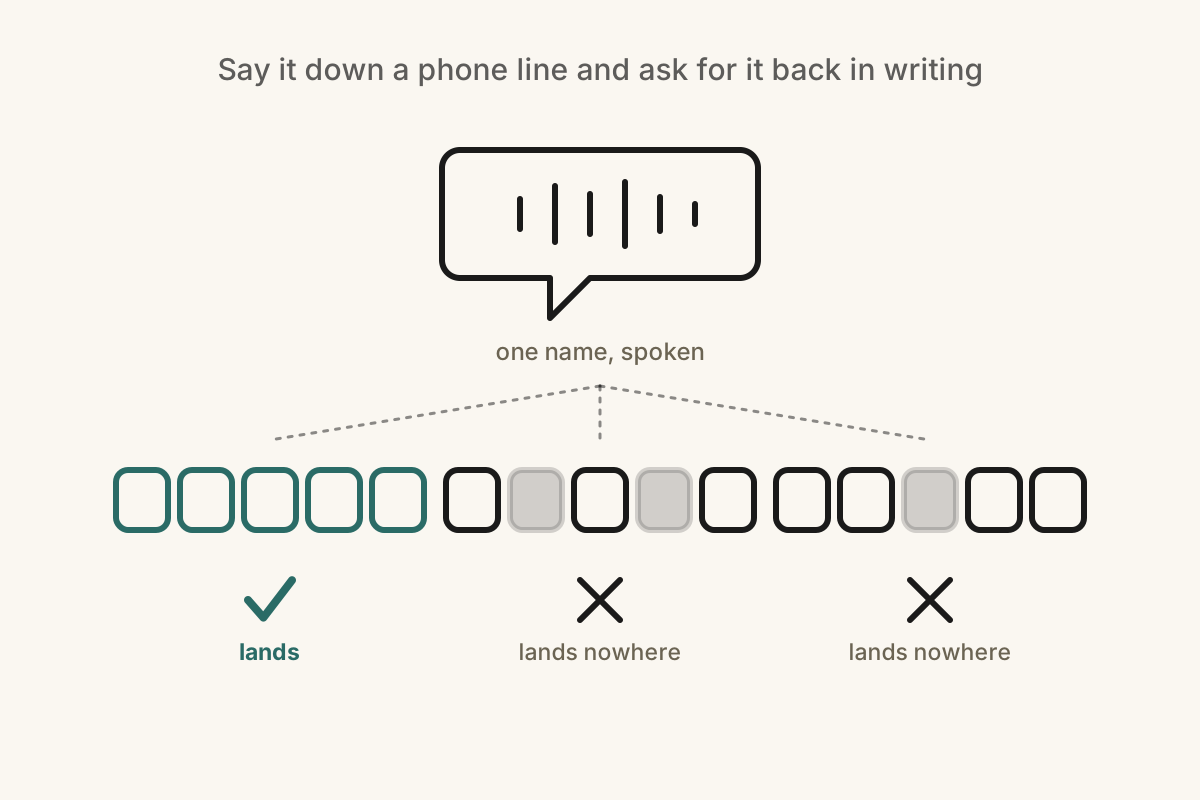
Say the name down a phone line and ask for it back in writing. If it returns in several spellings and only one lands, the name is harder than it looks.
The domain and the social handle are a five-minute search. If the match is already taken, or taken in a form close enough to cause confusion, it's far better to find out before the name means anything to you than after.
A hidden second meaning takes a short outside read. A word that reads clean in your own market can carry a second meaning somewhere else. It might land as something you never intended in another language, or read wrong sitting next to your category. So run it past a few people outside your own context, at least one fluent speaker of every language your customers actually use, before the name goes anywhere.
None of these is the reason a name fails. They cost an afternoon, and you pay it the same day. Clear them fast so your real attention can go where the expensive mistakes live, in the months after launch when nobody's checking anymore.
Month one, the name you can't defend
You can see this one coming in the first month, the moment you search the trademark register in earnest. Long before an examiner ever replies, a proper knockout search turns up the marks already sitting where you want to be. The names most likely to collide are the ones that spell out what you sell.
A name that plainly describes what you sell reads clearly, which is exactly why founders reach for it. That same plainness makes it the weakest kind of name to own. The United States Patent and Trademark Office ranks trademark strength on a spectrum, and it's blunt about the bottom of it. Fanciful, arbitrary, and suggestive marks are strong. Descriptive marks are weak and, in the office's own words, hard to protect against competitors. A generic term can't be registered at all, because a word that only names the product can't point to any single source.
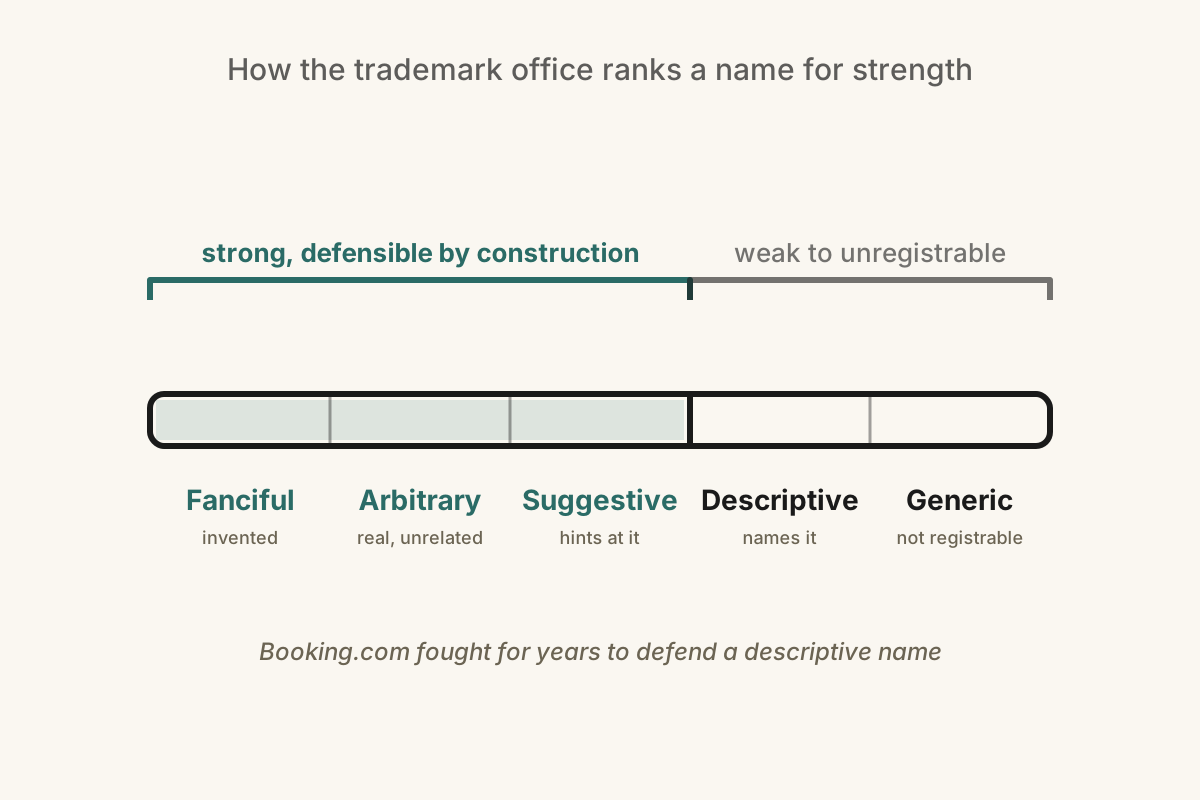
The office is blunt about the bottom. Fanciful, arbitrary, and suggestive names are strong. Descriptive is weak, and a generic term can't be registered at all.
A descriptive name isn't impossible to register, but the price is steep. You have to prove the name has come to mean your company specifically, the thing the law calls acquired distinctiveness. That usually takes years of use and heavy marketing before the office will grant it. Booking.com spent its way to the Supreme Court to keep its name. In 2020 the court ruled 8 to 1 that Booking.com was registrable. It won only because surveys, sales, and a decade of exclusive use had proven the public read the word as one company rather than a category. So that's the cost of defending a descriptive name, paid by one of the largest travel brands on earth.
The check costs an afternoon. Before you commit, read your shortlist against that distinctiveness spectrum. Aim for the suggestive middle, a name that hints at the benefit without naming the product outright. Then run a knockout search across your own class and the classes next to it, not a quick web search for the exact word. That screen won't replace counsel, and the final legal read belongs to a trademark attorney. But picking a name that's built to be defensible in the first place is your call, and it costs nothing.
Month six, the name that breaks when it's spoken
Six months in, the next bill arrives in the conversations that never happen.
A name a buyer isn't sure how to say does its damage in silence. It doesn't get recommended out loud, because people avoid saying words they might get wrong in front of someone else. The same name gets typed into search in three different spellings, and two of them land nowhere. So word of mouth, the cheapest growth a brand ever gets, quietly stops working, and the founder sees only a flat traffic line with no obvious cause.
Names that are harder to process read as less familiar, and that unfamiliarity carries into the product itself. Across four studies, Leonhardt and Pechmann (2021) found that hard-to-pronounce product names were judged less favorably. Buyers also felt those products were less within their control, an effect that ran through reduced familiarity. The research has limits. The strongest early claims held that an unpronounceable name signals outright danger, and those didn't all survive later replication. So this is a real cost, not a curse. But a name the market can't say confidently has to pay with advertising for the attention that word of mouth should have produced for free. The fuller account of why ease reads as trust is processing fluency.
Hand the name to someone who's never seen it and ask them to say it in a sentence, the way they would if a friend asked what they'd been using. Listen for the half-second pause before they commit to a pronunciation. That pause is the sound of word of mouth not happening.
Year one, the name that fights its own category
By its first year in the category, the most expensive mistake comes due, and it's the one a plain checklist will never catch. The name's own sound is working against the product.
A name carries meaning through its sound before a buyer reads a word of copy. The sounds arrive already implying fast or slow, light or heavy, sharp or soft. A name whose sound fights what the product is for reads wrong in a way customers feel but can't put into words. The clearest test of this is an experiment by Yorkston and Menon (2004). They gave two groups the same fictional ice cream under two names that differed by a single vowel, Frish and Frosh. The group given Frosh, the back-vowel name, rated the identical product smoother, creamier, and richer. One vowel moved the taste, before anyone had tasted anything.
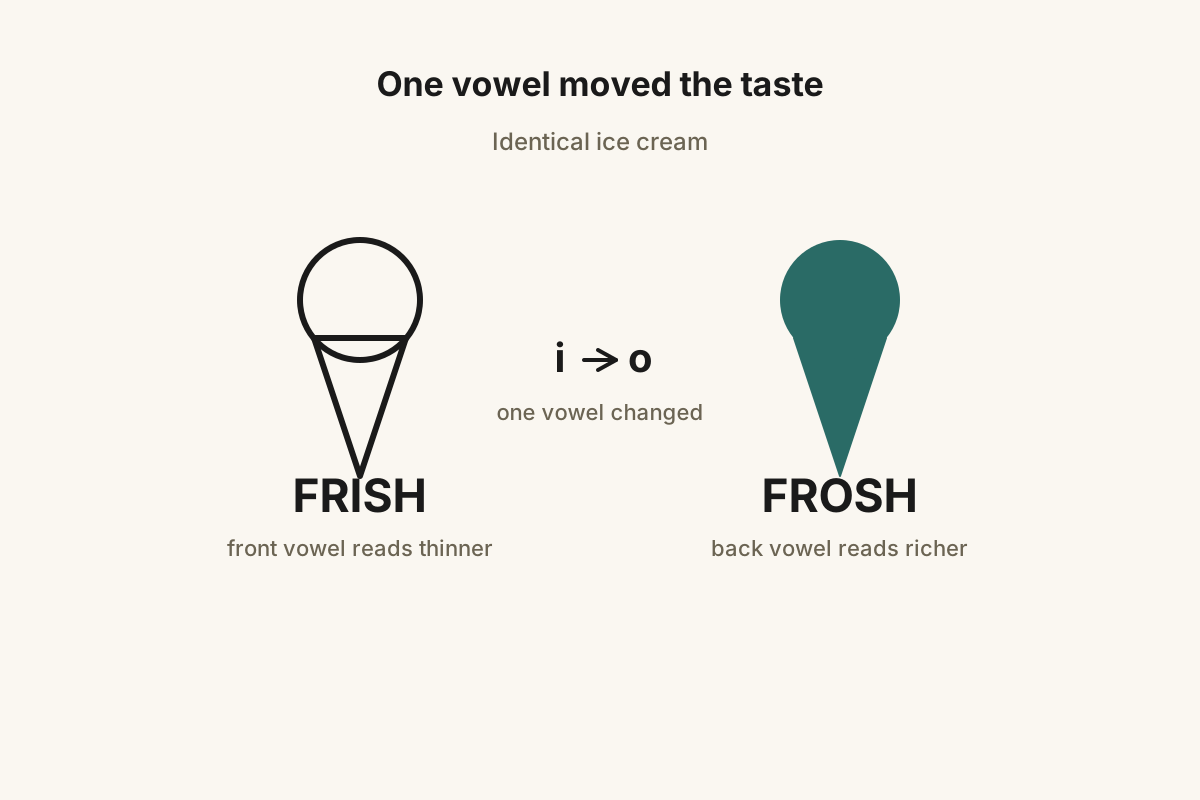
Same fictional ice cream, two names one vowel apart. The back-vowel name, Frosh, read as smoother and richer from the sound alone.
Crowding is the other half of the problem. When every name in a category reaches for the same register, that register stops setting anyone apart. BrandNames scored roughly five thousand DTC brand names with a deterministic phonetic map. That map is a fixed rule set that reads each name's sounds the same way every time, rather than leaving the call to opinion. Under that map, the most common sound impression by far is light. It's the dominant attribute in 31.2 percent of the names, ahead of smooth and fast. So a founder reaching for a name that feels clean and quick and modern is reaching for the register a third of the category already occupies. The crowding shows up in plain words too. Nearly a quarter of the names are built to describe the product, and about two thirds, 64.2 percent, are made of ordinary real words. That's most of the category standing in the same spot.
Run the line-up test. Set your name beside four real competitors, written the way a customer would see them together, and ask whether a stranger could pick yours out and say what it's for. Then read your name's sound against the job the category does, and watch for the moment the two point in opposite directions. The science underneath that read is sound symbolism.
Why the screen always beats the fix
The bill for a naming mistake grows the later it arrives. The check that would catch the mistake never grows. It stays an afternoon of attention at every stop, whether the mistake is a one-minute spelling slip or a name so descriptive it takes years to defend. That gap, between a fixed cost paid early and a rising one paid late, is the whole case for screening.
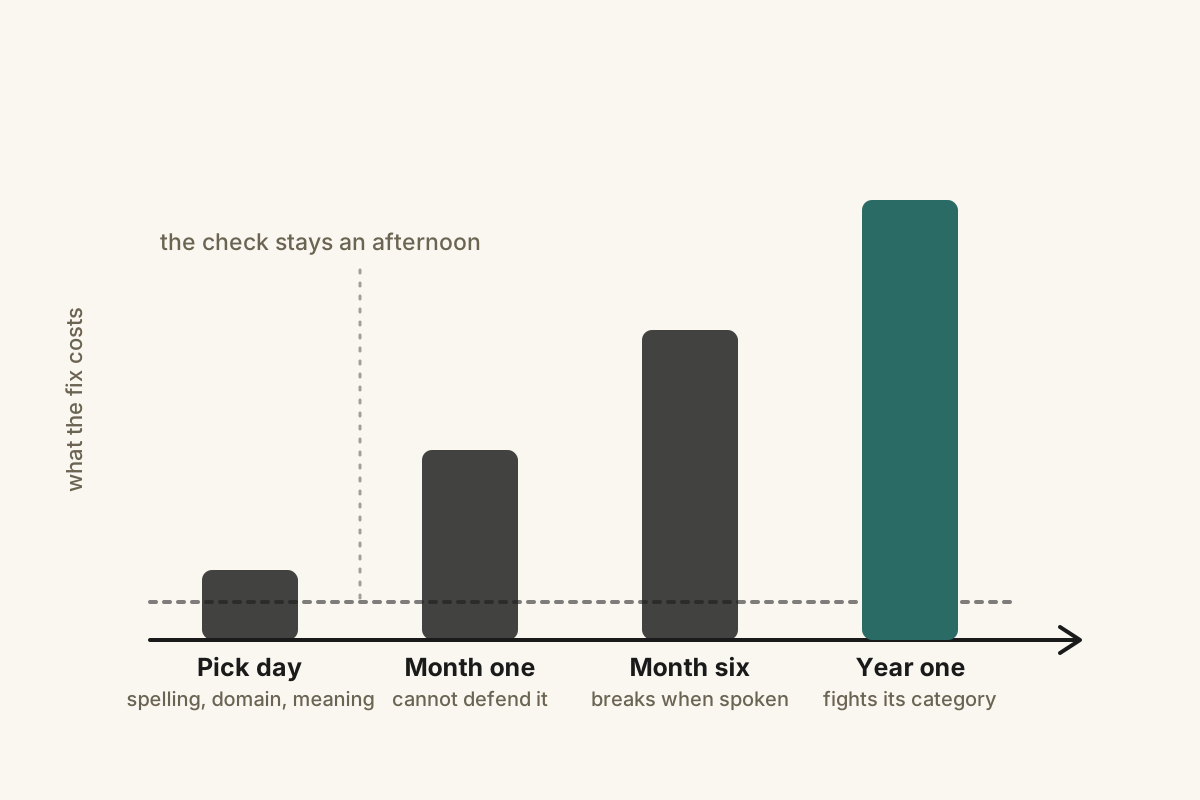
Every mistake bills at a different point in the life of a name, and the later it surfaces the more it costs. The check that catches it stays an afternoon at every stop.
Founders skip the screen for one reason. The bill is invisible on the only day they look. A name gets chosen in a room full of people who already like it, on a day when nothing has gone wrong yet, and every one of these mistakes is still in the future. So the screen feels like caution about a problem that doesn't exist yet. Months later it does exist, and the afternoon that would have prevented it is long gone.
Once a name is live, the mistakes stop being things to avoid and become failure modes to manage, a different problem with a different set of moves. The cheaper place to solve all of it is before launch, and every screen here is one a founder can run alone.
Frequently asked questions
What is the most common brand naming mistake? Picking a name that spells out the product, because it reads clearly the day you choose it. Clear feels safe in the room, but a descriptive name is the hardest kind to register and the easiest for a rival to crowd. Underline every word in your shortlist that a customer could guess straight from the category. The more underlines a name carries, the harder it will be to own.
Should a brand name be descriptive? Aim for a little suggestive rather than literally descriptive. A name that hints at the benefit can still be owned and defended. A name that plainly states the product is weak to protect, because the USPTO puts descriptive marks at the bottom of its strength spectrum. Lay your options on a line from invented to plainly descriptive, and keep the ones that sit just off-centre toward invented.
How do you know if a brand name is too generic? Swap your name onto a competitor's product and see if anyone would notice. If it slides on without a blink, the name is too generic to set you apart, however clearly it reads on its own. For a fuller read, line your name up beside four real rivals the way a customer would meet them together, and check whether a stranger could pick yours out and say what it sells.
What makes a bad brand name? Not ugliness, and not a missing domain. The names that cost the most look fine on launch day and fail slowly, in a trademark refusal, a word of mouth that never starts, or a sound that pulls against the category. Check a name against all three before you commit, because each problem stays cheap to fix only while the name is still on paper.
BrandNames runs these screens, plus a full trademark and customer read, on founders' real shortlists before a name is locked. The doors open soon. Drop your email to get one note when they do.