
Run five thousand real DTC brand names through a phonetic sieve, and one name falls out the bottom. It's short, about five letters, and it's a single word. It opens on a hard sound your mouth makes by briefly stopping the air, something like a p or a t or a k. Its consonants and vowels take turns so cleanly that you can say it on the first try without thinking. And read for nothing but its sound, it lands light.
The name is Tobel. It answers one plain question. What do most brand names sound like? No DTC brand carries the name. It was built for this article. Every property came from the middle of 5,018 analyzed DTC names, so it doesn't look built. Put Tobel in a skincare category and it vanishes. Put it in soda, or in running shoes, and it vanishes there too. The average DTC name is so sharply defined and so crowded that a name built to sit dead in its center reads as real, not invented. Across all 5,018 analyzed DTC names, the pattern is that sharp. Five letters is the single most common length. Just over half the names are one word. A third open on a hard plosive. And light is the most common sound impression, at 31.2 percent.
The corpus is roughly five thousand real, mostly established DTC brands. They are catalogued across nine parent categories and ninety-one subcategories. Every name ran through the same phonetic read, one grounded in the peer-reviewed sound-symbolism research this post cites. The read counts letters and syllables. It classes the opening sound, measures how open the vowels run, and gauges how much the consonants cluster. It carries no labels for winners and losers, so it can't prove what makes a name succeed. What it shows is where the names the market actually built have piled up, a portrait of the center rather than a recipe. And a portrait of the center is worth having anyway, because it shows exactly where everyone else is standing and lets you decide whether you want to stand there too.
The sieve, property by property
Every property of Tobel is a measured fact about the corpus, not a rule anyone set out to follow.
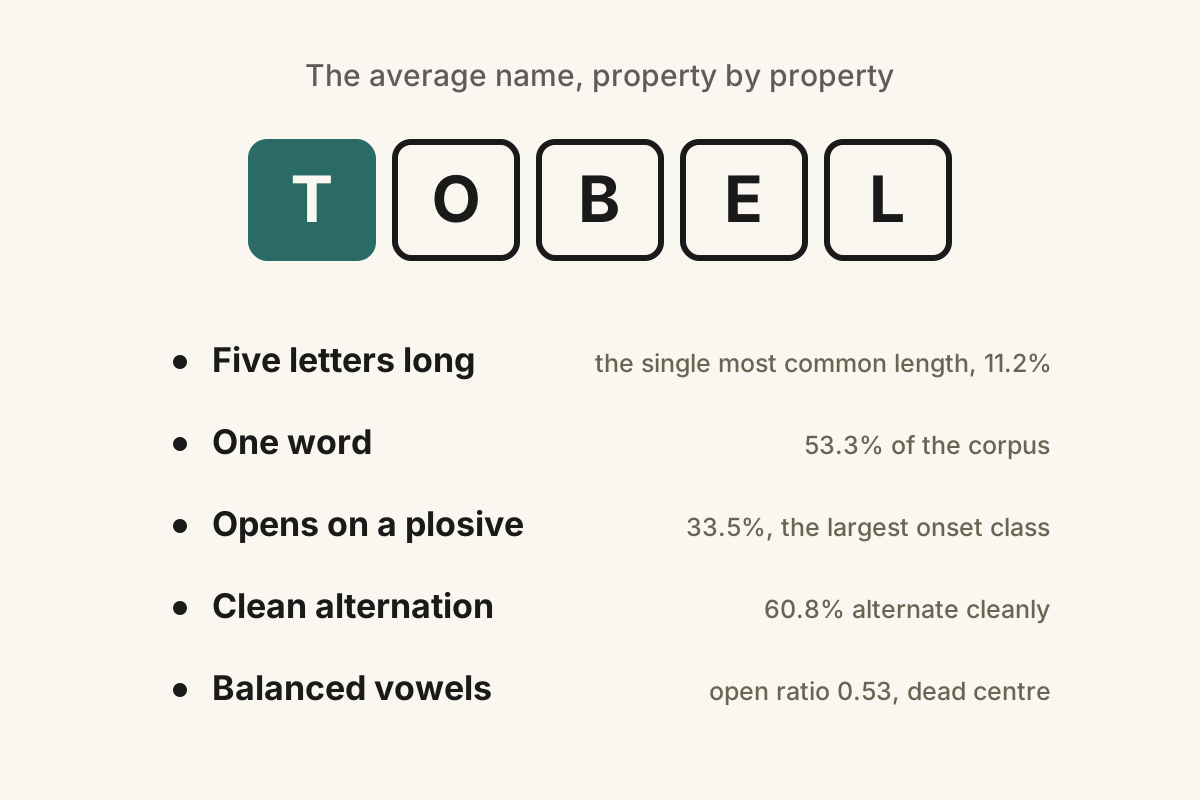
Every property of the composite is the most common option at that step. Five letters, one word, a plosive onset, clean alternation, and balanced vowels.
Length sets the frame. The average analyzed name runs 8.8 letters, and the median is 8. But the single most common length is shorter than both. It's five letters, which describes 11.2 percent of all names on its own. Widen it a little and the picture holds. Just under a third of the corpus, 31.5 percent, is six letters or fewer. Half of it sits in a tight four-to-eight-letter band. Long names exist too. About 16.1 percent run to thirteen letters or more, though most of those are two or three words rather than one long word. So Tobel is five letters, because five letters is where the pile is highest.
Word count tells the same story. A clear majority of the corpus, 53.3 percent, is a single word. Another 36 percent is two words. Only 10.7 percent runs to three or more. The default DTC name is one word you can fit on a bottle. So Tobel is one word, not a phrase.
The opening sound is where the convergence sharpens. The largest onset class, by a wide margin, is the hard plosive. Those are the b, d, g, p, t, and k sounds. A third of all names, 33.5 percent, open on one. Sibilant openings come a distant second. The s, z, and sh sounds account for 9.6 percent. Tobel opens on a t, because the category opens on a plosive more than any other way.
Sayability is measurable too. Most names alternate cleanly, consonant then vowel then consonant. That is the pattern the mouth finds easiest. Six in ten names, 60.8 percent, alternate that cleanly. Only 6.8 percent are clogged with consonant clusters. Tobel, spelled t-o-b-e-l, alternates perfectly, so it is hard to mispronounce.
The vowels close it out. They run on a rough scale from open to closed. The corpus sits almost exactly in the middle. The open-vowel ratio averages 0.529, with a median of 0.5. The average name is neither all bright closed vowels nor all round open ones. It hedges. Tobel hedges too.
Put those five choices together and the result is a name that sounds like it already has a storefront. Every one of them was the most common option at its step.
What do most brand names sound like
Length and letters are the skeleton. The sound is what a buyer actually hears, and the corpus has a clear favorite.
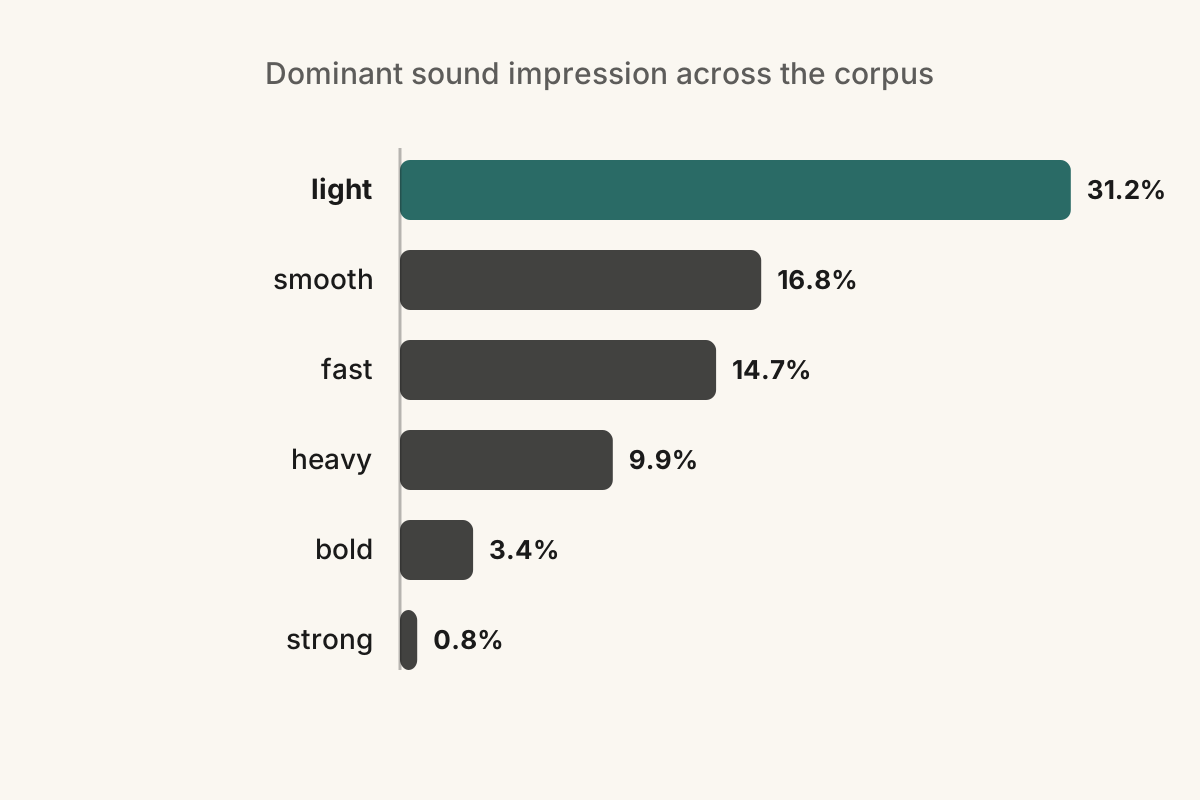
Read for nothing but sound, a third of the corpus lands light. The loud impressions, heavy and bold and strong, are dominant in about 14% combined.
Read every name under a sound-symbolism map, and one impression dominates. The map is the deterministic version of the dials the companion piece on sound symbolism explains. Light is the strongest impression in 31.2 percent of names, with smooth next at 16.8 percent and fast close behind at 14.7 percent. Add those three together and a name reads light, smooth, or fast first in 62.7 percent of the corpus. That is very nearly two names in three. The heavier impressions trail far behind. Heavy is the strongest read in 9.9 percent, bold in 3.4 percent, and strong in under one percent. Added together, the loud and weighty sounds are the dominant impression in only about 14 percent of names.
This is a read of the sounds, not an objective fact about the words. The map measures what the phonemes tend to imply. It applies the same effect the science behind the companion piece documents, across the whole set at once. The pattern is hard to miss. The DTC category is light and quick and smooth. It is not loud.
There's a reason that holds across categories. Most DTC products are soft consumer goods, the kind you wear or rub into your skin. A light, smooth sound flatters that kind of product. So one category after another, each optimizing on its own, reaches for the same register. And once they all reach for it, the register stops doing any work. When light is the default sound of the category, a name that sounds light no longer stands out. It blends in.
The same pull shows up in independent research
The convergence isn't an artifact of one site's measurement. The same narrowing shows up in independent, peer-reviewed work that used a different method on a different set of brands.
In 2015, Pogacar and colleagues analyzed the sound of the world's most valuable brands, the Interbrand Top 100. They found that the top names carry a more sound-symbolically loaded profile than brands in general, with sounds like plosives over-represented among them. These were global megabrands, not DTC upstarts. The same pull toward a narrow, loaded profile still showed up. The corpus here shows that pull one tier down, across five thousand of the smaller brands a founder actually competes against in a real category.
Convergence like this needs no conspiracy and no copycat, because it's just what happens when many people solve the same problem under the same constraints. Every founder wants the same four things in a name. Easy to say, easy to spell, available as a domain, right for a soft product. Reasoning alone, each one walks toward the same word shape. That shape is short, plosive-opening, cleanly alternating, and light. That is where all those constraints point at once. Nobody is copying anybody. They're all climbing the same hill from different sides and meeting at the top, which is exactly where Tobel is standing.
Why the category blurs together
Landing in the middle of that center carries a real cost, because the average name is this sharply defined and this densely populated. A name built to sit in its middle doesn't read as distinctive. It reads as camouflage. It sounds like the names printed on either side of it.
Picture what a buyer does in front of a crowded category page. They're not reading each name carefully and weighing its phonetics. They're scanning. A name that sounds like the four beside it gets sorted into the same bin and forgotten. Tobel is the worst case here. It's perfectly average. It has nothing to catch on. Every property that makes Tobel easy to say is the same property that makes it easy to confuse with everything else built the same way.
This is the part most founders get backwards. You look at a category full of light, smooth, plosive names. The instinct is to build one more just like them. That is what a real brand in the category sounds like, after all. The corpus says the opposite. The category doesn't sound alike because its founders lacked imagination but because every one of them optimized correctly for sayability and fit and availability. Optimizing converges. Doing the sensible thing is exactly what lands a name in the crowd. A name stands out only when it's built to differ from the center on purpose, which means knowing where the center is before you start.
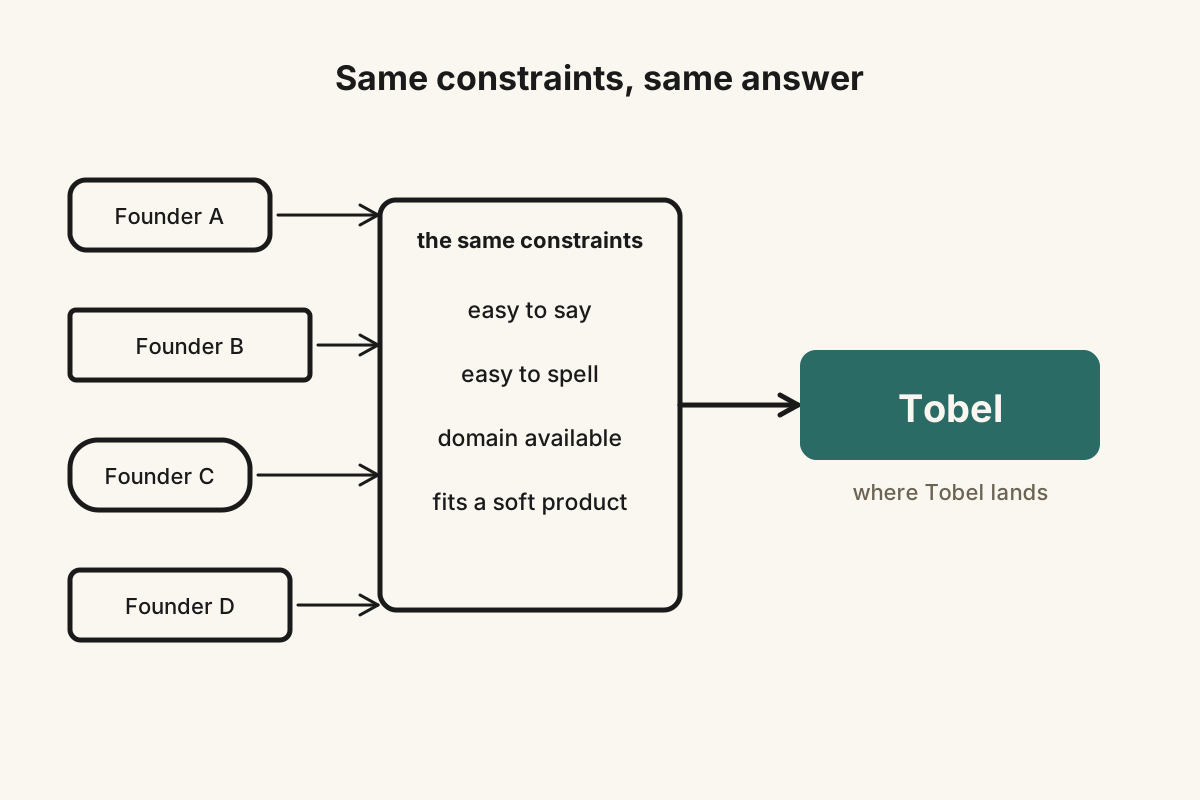
Each founder starts from a different instinct and optimises alone for the same constraints, so the four paths collapse onto the one shape the average name already is.
The sound the category is not making
If the center is this crowded, the useful question is what the corpus barely contains. That's where the room is.
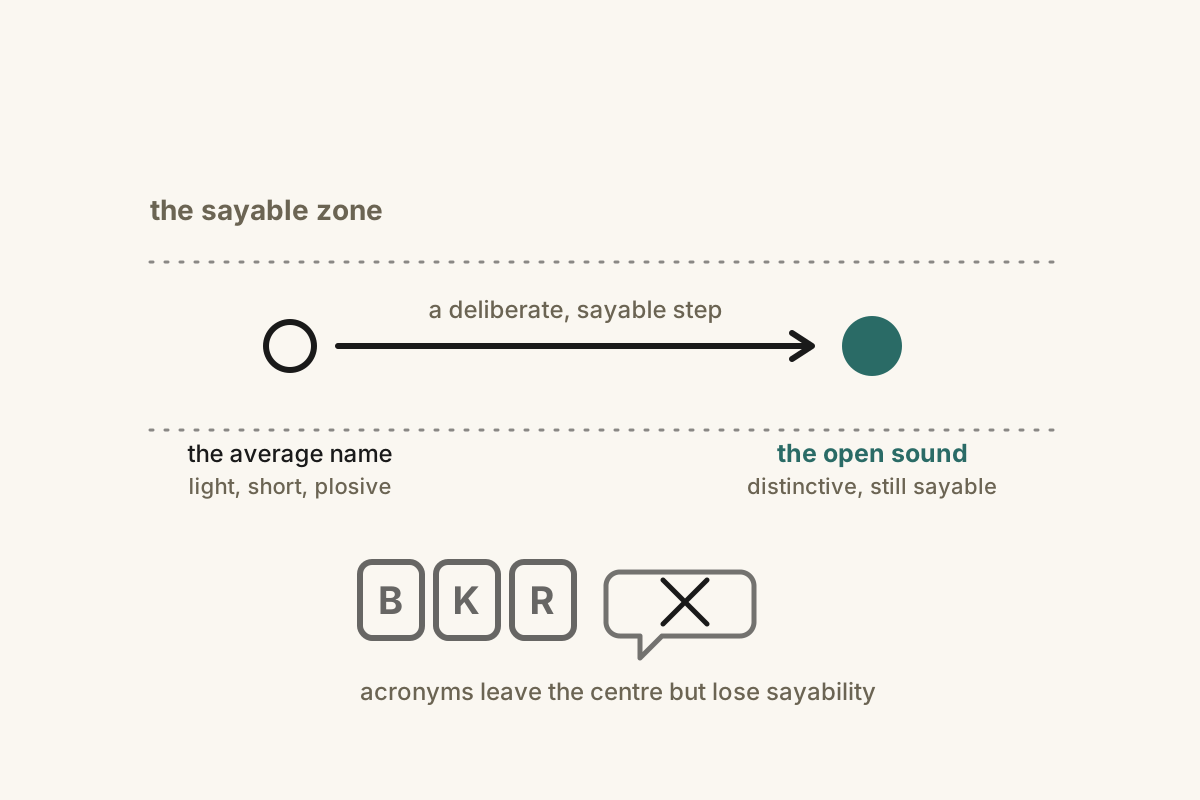
The room is not in the unsayable acronyms below the line. It is a name as easy to say as the average but built to differ from it, the rarest thing in the corpus.
Start with the impressions. The loud, weighty sounds are the rarest. Heavy, bold, and strong together are the dominant read in only about 14 percent of names. So a name built to feel solid or forceful is reaching for a register most of its category has left empty. The sock brand Bombas is one of the few that does it, its voiced plosives and back vowels reading heavy on a product whose whole pitch is cushioning and bulk. The structural tricks are rarer still. Alliteration turns up in about one name in ten. Reduplication shows up in 0.3 percent of the corpus. That's the repeated-syllable trick behind names like Nom Nom. That is seventeen names in five thousand. True palindromes like Sonos and OXO are just as rare, another seventeen. These aren't overused devices. They're nearly unused ones.
There's a wrong way to leave the center, though, and a fifth of the corpus takes it. About 21.7 percent of names carry a three-plus consonant cluster. Almost all of them are acronyms or stripped-down stylings like BKR, JBL, ASRV, CDLP, and PSD. These names do break from the soft, sayable middle. But they break it by throwing away the one thing that made the middle work, which is sayability. They're different the way a license plate is different. You can't say them, so they can't travel by word of mouth. The fluency cost of an unsayable name is real.
So the open sound-space is narrow and specific. It isn't noise, and it isn't an unpronounceable acronym. It's a deliberate step away from the center that keeps the name sayable. Think of a name a notch heavier or stranger than the category around it, while staying as easy to say as Tobel. That combination, distinctive but still fluent, is the rarest thing in the corpus. Which is exactly why it's the most available.
What to do before you land in the middle
A free name generator won't get you here. A generator optimizes for two things, available and unique. So it pushes names toward the long and the invented, because that's where the unused domain names are. And that far tail of the distribution is nowhere near where buyers actually shop. A generator misses the crowded center that's at least full of working brands and the narrow, sayable edge that takes judgment to find. So it lands a name in the noise. Not the white space.
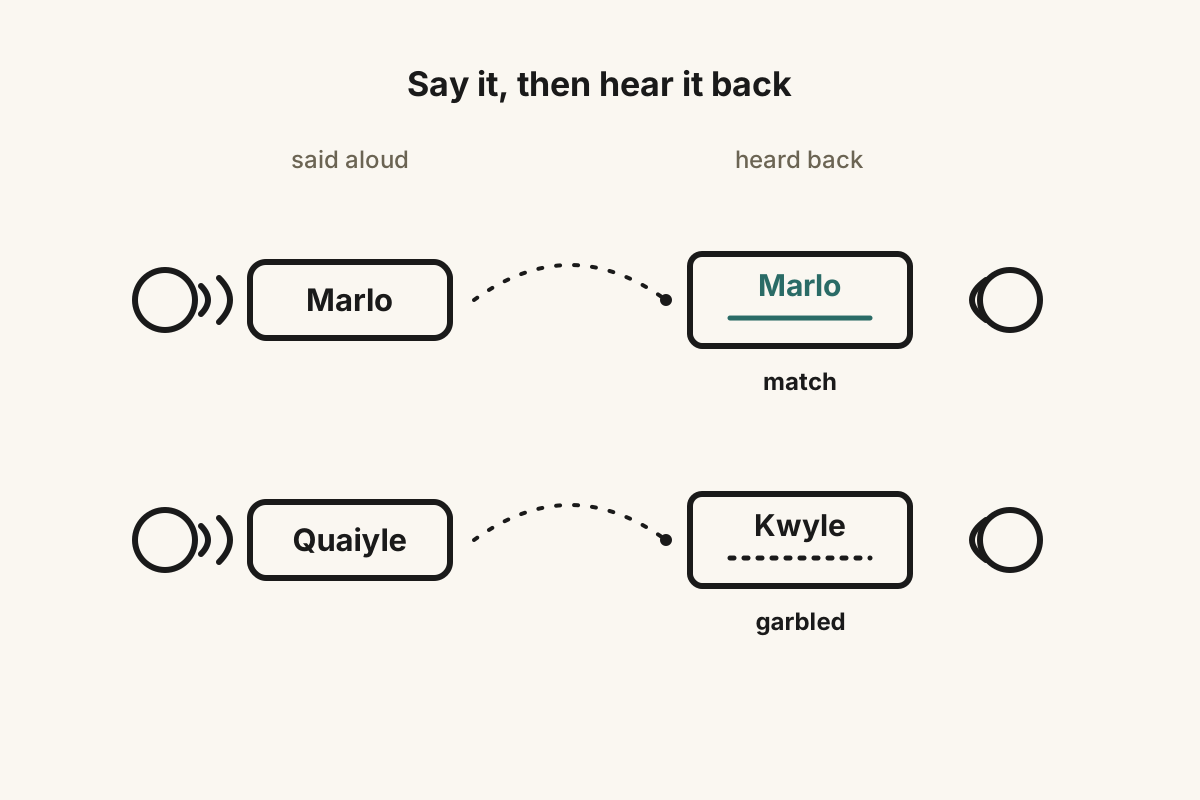
Say a candidate aloud and have someone write back what they heard. A sayable name returns intact, a slippery one comes back garbled.
The corpus points at a different starting move. Before you generate anything, read the category you're actually going to compete in. Find where its names pile up. Look at length, at opening sound, at the impression they give off. Then decide whether to join the pile or step a deliberate, sayable inch away from it. The vocabulary for that read is in the naming science glossary. That's where plosive, sibilant, and sonorant get defined. You can't step away from the center until you know where it is, which is exactly why most founders never stop to look. They build one more Tobel, then wonder why the category swallowed it.
BrandNames reads that distribution for a founder's real category before a single name gets generated. The reading is the part that matters, and the corpus is the proof of how rare that name is. The off-center, still-sayable slot is the one the crowd leaves open.
Frequently asked questions
What do most brand names sound like? Short, easy to say, and forgettable by design. A typical DTC name runs to about five letters and sits in a single word, opening on a hard plosive and reading light. Put those defaults together and the name sounds invented to fit the category. The catch is that fitting the category and standing out in it pull in opposite directions. So the average sound is the safe one, not the proven winner.
Do most brand names start with a certain sound? Yes. A third of DTC names, 33.5 percent, open on a hard plosive. Those are the b, d, g, p, t, or k sounds. It's the largest opening class by far. By letter, S starts the most names, ahead of B, M, C, and P. The s and sh sounds come a distant second, at under 10 percent.
What is the average length of a brand name? The average analyzed DTC name runs 8.8 letters. But the average misleads here. A handful of long, multi-word names pull the mean up. The single most common length is much shorter, at five letters. And just over half the corpus is one word. Read it as a record of what the market built rather than a rule to follow, since plenty of strong names sit well outside it.
Why do so many DTC brands sound the same? Not from copying. Each founder optimizes alone for the same handful of practical constraints. So they all walk toward the same short, light, plosive-opening center. Nobody coordinates. Convergence like that is a byproduct of everyone being sensible, not lazy. The useful part is that it's measurable. Map where a category has piled up, and you can choose a sayable spot just off it. That's the one move the convergence leaves open.
Are plosive brand names better? Plosive openings are the most common, not the proven best. A third of analyzed DTC names open on a hard plosive. At 33.5 percent, it's the largest onset class by far. The corpus records what the market built, not what wins. So a plosive opening is the safe center, not an edge. One caveat cuts the other way. The Pogacar study of the world's most valuable brands found the same pull toward sound-loaded openings, which supports the pattern without proving that copying it pays off.
BrandNames reads the sound of a founder's real category, then builds names against that instead of against an empty domain field. The doors open soon. Drop your email to get one note when they do.