
A well-chosen name can still break later, in one of four independent ways. Most names that fail weren't bad names at all. They cleared every check the day they were chosen and broke a year or two later. A name can grow hard to say as it spreads. It can vanish next to competitors it once stood apart from, collide with a trademark that was always sitting there, or have its meaning rewritten by an event nobody saw coming. Each is a different way a working name stops working.
A name can be a pleasure to say and still be legally cornered. Another sails through a trademark search and then vanishes in a lineup. Each is a separate exit. Each one leaves a mark at the very beginning, a small tell that was visible the day the name was picked, if anyone had known to look for it. Each tell is something you can run your own name past, so you catch a weak spot while fixing it still costs nothing.
The test most founders run measures the wrong day
The launch-day test asks whether the team likes the name and whether the domain is free, maybe whether it looks right on the homepage. All of that measures the name on the calmest day it'll ever have, in a room of people who already know what the company does and are rooting for the name to work.
A name isn't really tested on launch day. The test comes later, under pressures nobody recreates in the meeting where the name gets picked. A stranger has to say it to another stranger and get it right. It has to earn its place beside four rivals a buyer is meeting for the first time. And eventually it faces a trademark search run by a company big enough to be worth suing. None of those forces are in the room on the day the name feels fine, which is exactly why that day is the wrong one to trust. A logo redesign that lands badly is a different failure, because the look changed while the name held. These four modes are about the name itself breaking, which is harder to see coming and more expensive to undo. Getting the name right the first time, with a real naming process behind it, heads off all four exits.
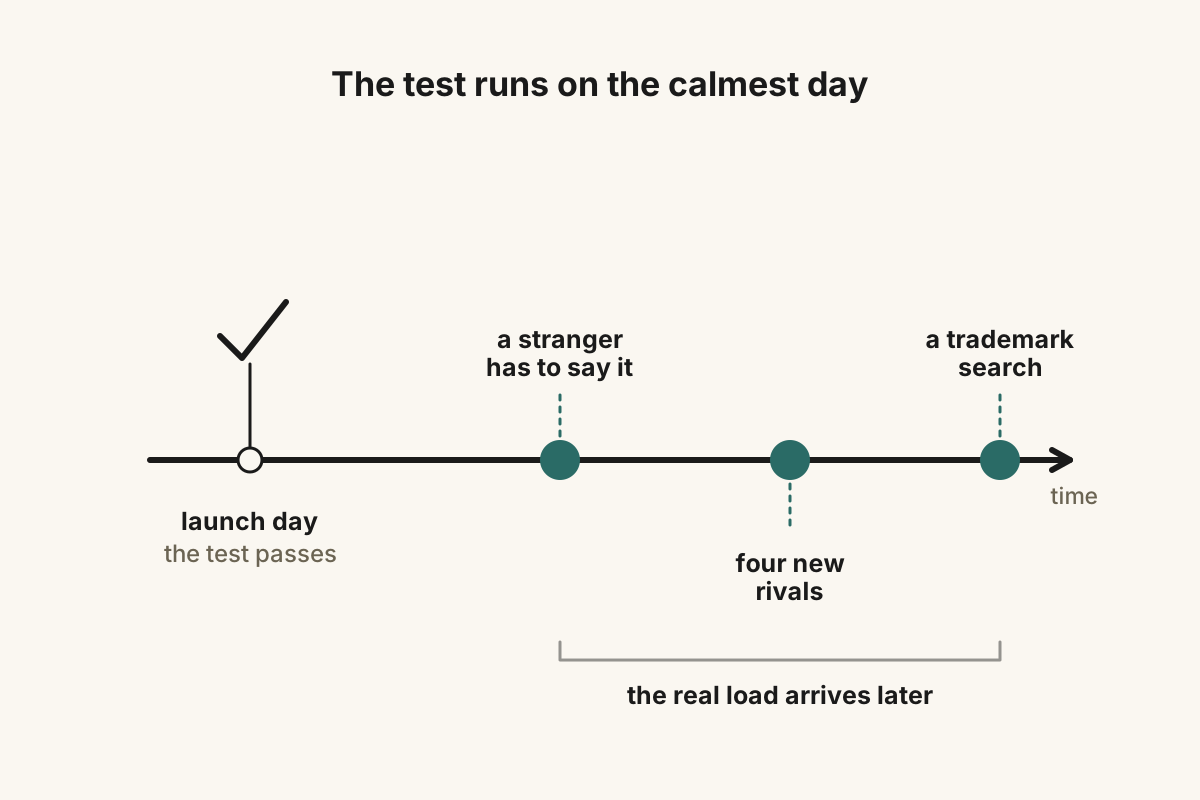
The test runs on launch day, the calmest day the name will ever have. The real load only lands later, when a stranger has to say it, when it meets new rivals, and when a trademark search reaches it.
The name the buyer cannot confidently say
A name a buyer isn't sure how to say does its damage quietly. It doesn't get recommended out loud, because nobody wants to fumble a brand name in front of a friend. It gets typed into search wrong, so the traffic lands nowhere. The trouble never shows up in a focus group, where people read the name off a card in silence. It only appears in the wild, where names have to be spoken to spread.
Hyundai is worth studying because the brand succeeded despite the problem. For years it's been one of the most mispronounced names on American roads, said as High-un-die and Hun-dee and Hoon-day by people who had no agreed version to copy. The company's spent real money trying to settle the question. One Super Bowl spot was built around the line that the name rhymes with Sunday, and a later campaign with Jeff Bridges taught the same lesson again. A name that needs paid advertising to tell the public how to pronounce it is carrying a tax, and it's carried that tax since launch. Hyundai could afford it. A smaller brand usually can't.
The tell shows up early, and you can feel it. If you catch yourself adding "it's pronounced" when you say the name, or if more than one early customer spells it back to you wrong, the name already needs a footnote in conversation. A name that needs a footnote between two people will need an ad budget at scale. The friction isn't cosmetic either. A name that's hard to say reads as a little less trustworthy before anyone knows anything else about it, which is the effect at the center of processing fluency in brand names. Research on hard-to-pronounce product names finds that buyers infer less control over what they're buying when the name resists the mouth. That effect fades only when control doesn't matter to the purchase (Leonhardt and Pechmann, 2021). Every awkward pronunciation is a small tax on word of mouth the brand will spend the rest of its life trying to earn.
The name that vanishes in a lineup
A name that vanishes in a lineup is the most common failure of the four, and the hardest to see coming, because it looks perfectly fine on its own. It only fails in company. A name that describes the category dissolves the moment it stands in a row with the others. So does one that shares the sound and shape of its five nearest rivals. Both read well in isolation. The buyer can't pick it out, can't recall which one it was, and reaches for whichever name happened to stick.
So many names fail this way because most names start from the same small pool to begin with. A BrandNames read of 5,000 direct-to-consumer brand names found that almost two-thirds were built from real words rather than coined ones, drawing on the same shallow shared pool. The word beauty sits inside 44 of those names, co inside 34, good inside 28. And 190 of the names are exact duplicates of another brand in the set, with three separate companies simply called Primary. When that many names are built from the same few parts, reading fine on its own isn't a sign of strength. It's the statistical baseline.
A name can also lock a company into a corner of the category it has outgrown. When Overstock renamed itself Beyond in 2023, its chief executive was blunt about why. The old name confused customers and vendors and pinned the business to a closeout-and-discount slot it had left two decades earlier. The name wasn't unsayable or illegal. It described something the company no longer was, and it stood next to the wrong neighbors. You can test your own name for this cheaply. Picture it sitting on a competitor's product. If the swap goes unnoticed, or the name only describes the category instead of staking out a spot inside it, a buyer scanning the lineup won't remember which one was yours.
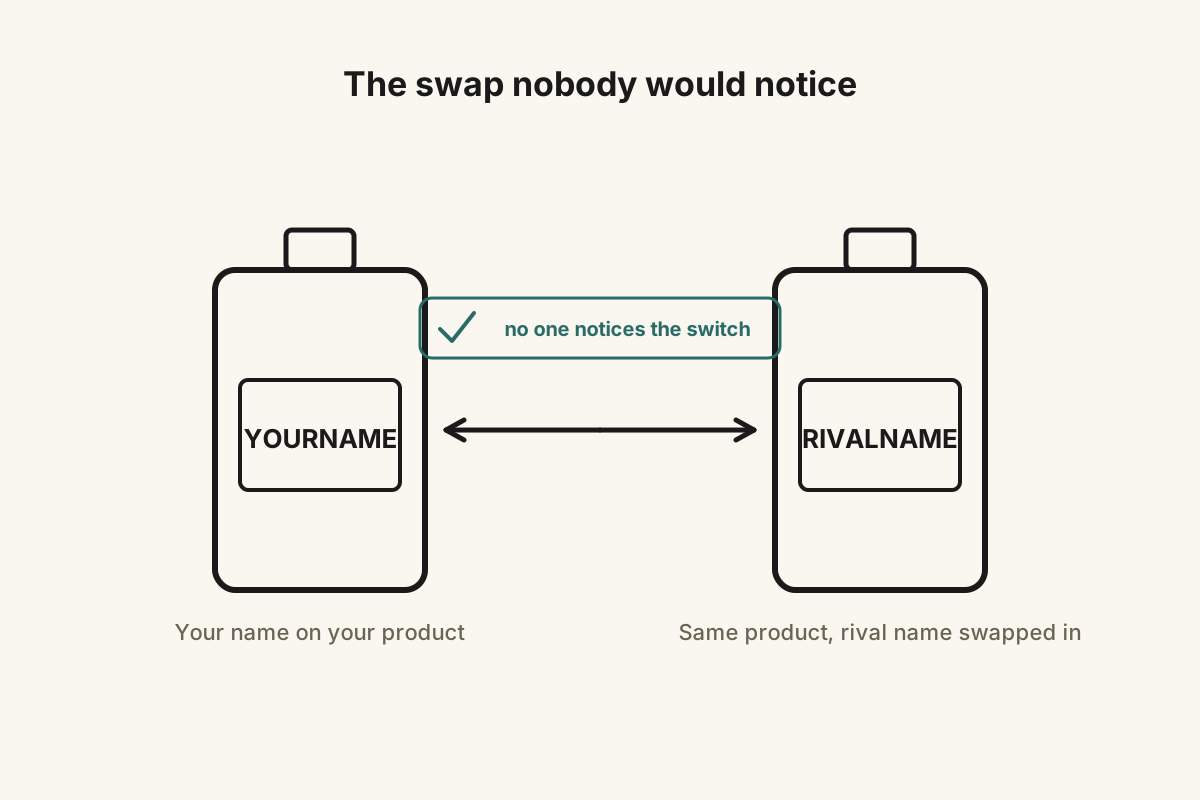
Picture your name on a rival's product. If the swap would go unnoticed, the lineup will not remember which one you were.
The name that was available but never defensible
A name can clear a casual search and still collide with a trademark that was always there. A founder runs a quick check, sees nothing identical, and launches. The brand grows and the name gains value. Only then does a prior holder, a phonetic near-match, or a registration in an adjacent class come to light and force a rename on someone else's timetable, usually at the worst possible moment.
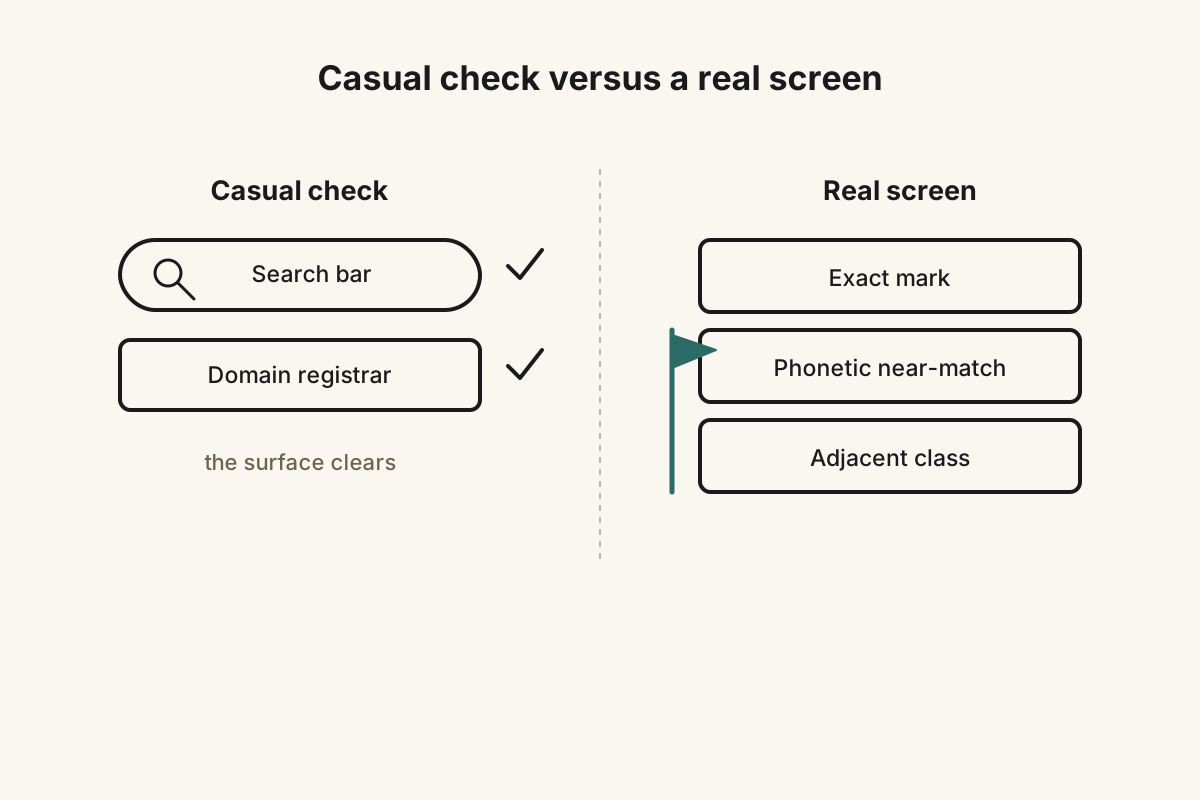
A search bar and a domain registrar clear the surface. The collision sits in the phonetic near-matches and adjacent classes.
The best-documented case is the World Wrestling Federation. The World Wide Fund for Nature had held the initials WWF as a trademark since 1961. The two sides signed a series of agreements limiting how the wrestling company could use them, including a broad one in 1994. The wrestling company kept pushing past the line, with the WWF.com domain and the scratch logo both arriving in 1997. The courts sided with the nature fund, first in 2001 and again on appeal in 2002, and that May the wrestling company became WWE. A set of initials that had been fine to use for years turned into a forced and expensive rename the moment they were valuable enough to be worth fighting over.
You can predict this collision from what got skipped at the start. If the only clearance was a search engine and a domain registrar, a collision may already be on the books. A real screen looks at phonetic equivalents and neighboring categories, not just exact matches. Before paying for counsel, a founder can run the free public registers first, checking USPTO TESS, the EUIPO database, and the WIPO Global Brand Database for exact and phonetic matches in the same class plus one or two adjacent ones. The final read still belongs to a trademark attorney, not a founder with a browser tab open. The collision doesn't announce itself. It waits until the name is worth taking.
The name the world redefines underneath you
The other three exits are mostly within a founder's control. The fourth, a name getting its meaning rewritten by the outside world, usually isn't. A name that meant one thing at launch can have its meaning overwritten by an outside event, with no mistake on anyone's part. Nothing about the word changes. The world just starts reading it differently.
Isis Pharmaceuticals had used the Isis name for about 26 years and traded under the ticker ISIS, building real recognition on it. Then the name of an ancient Egyptian goddess became the name of a terrorist group, and in 2015 the company renamed itself Ionis. The rename was part of a wave of the same forced move, including a payments venture called Isis that became Softcard. Decades earlier, the same thing killed a diet candy called Ayds, named in the 1940s to read as an appetite aid. Then the word ran headlong into the AIDS epidemic, and the name never recovered. The Ayds story is worth reading once for how completely an outside event can reprice a name no one had thought twice about.
You can see how exposed a name is from the start. The more it leans on a single common word, or a culturally loaded one, the more surface it gives the world to write over. A name that rents its meaning from a word in heavy public circulation can have that meaning repriced without warning. A coined, distinctive name that owns its meaning has far less to lose, because there's no rival definition out in the world waiting to take over. That's the quiet argument for inventing a name instead of borrowing one.
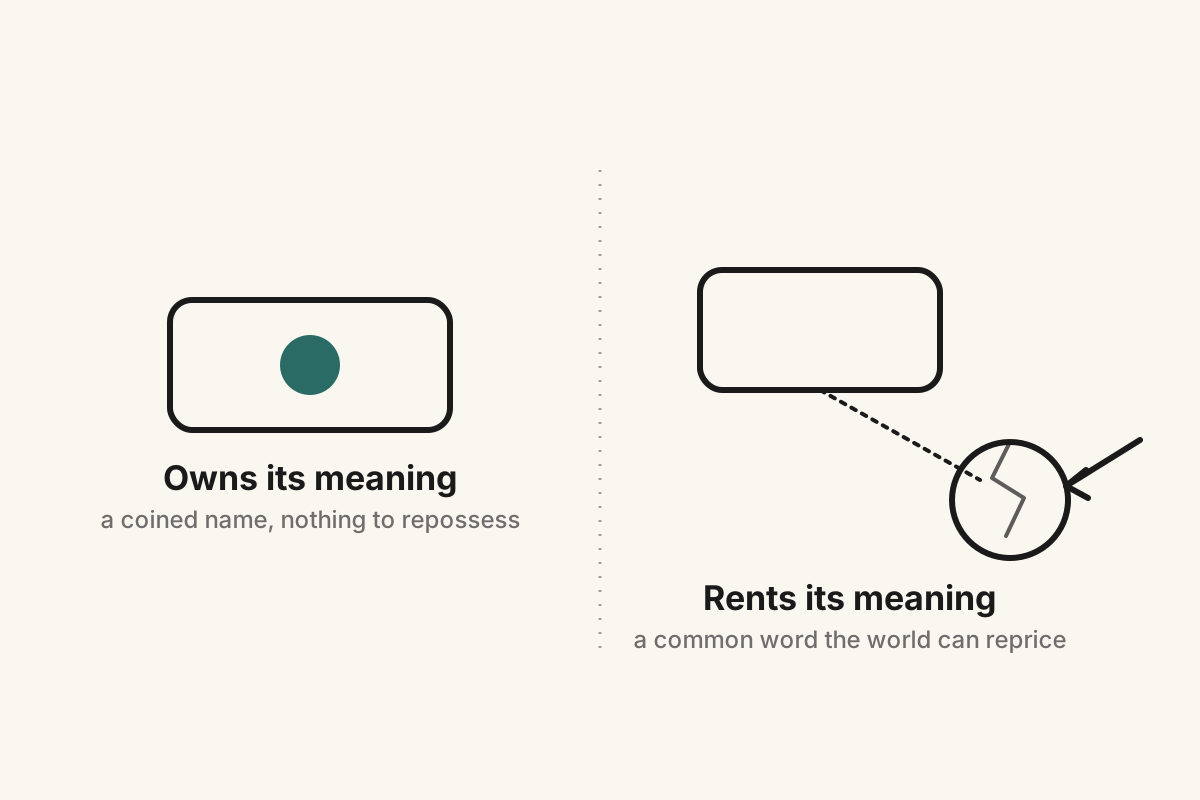
A coined name owns its meaning and has little to lose. A name that rents its meaning from a common word can have it repriced by the world without warning.
Before any of these becomes a rename
Run your own name past the four exits while it's still cheap to do.
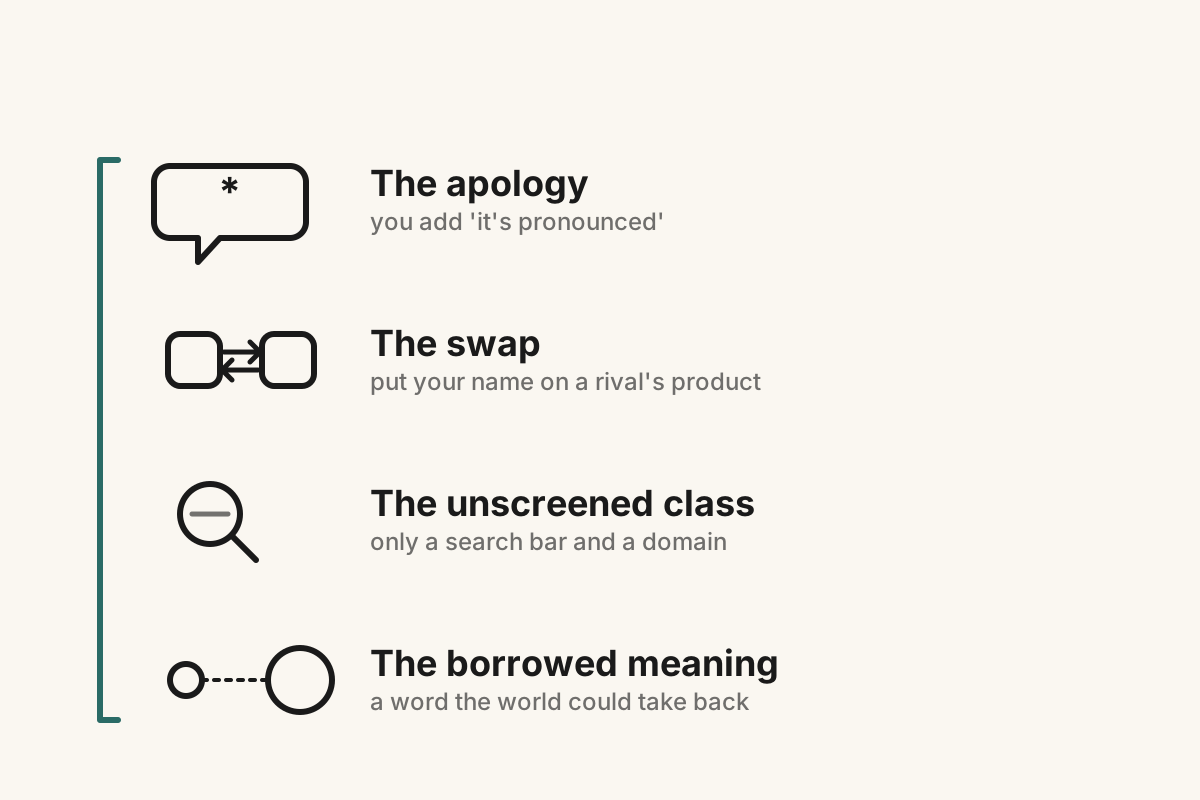
Four cheap tells you can run your own name past. The apology, the swap, the unscreened class, and the borrowed meaning.
Start with the apology, the it's pronounced you catch yourself adding when you say the name out loud. Next is the swap, picturing your name on a rival's product to see whether anyone would notice the switch. The unscreened class asks whether the name was ever cleared past a search bar and a domain registrar. And the borrowed meaning asks how much of its meaning it rents from a word the world could repossess.
If none of the four catches, the name's doing its job, and whatever still nags at you is probably cosmetic. If one of them catches, the name has a real problem, though the answer is rarely an immediate rename.
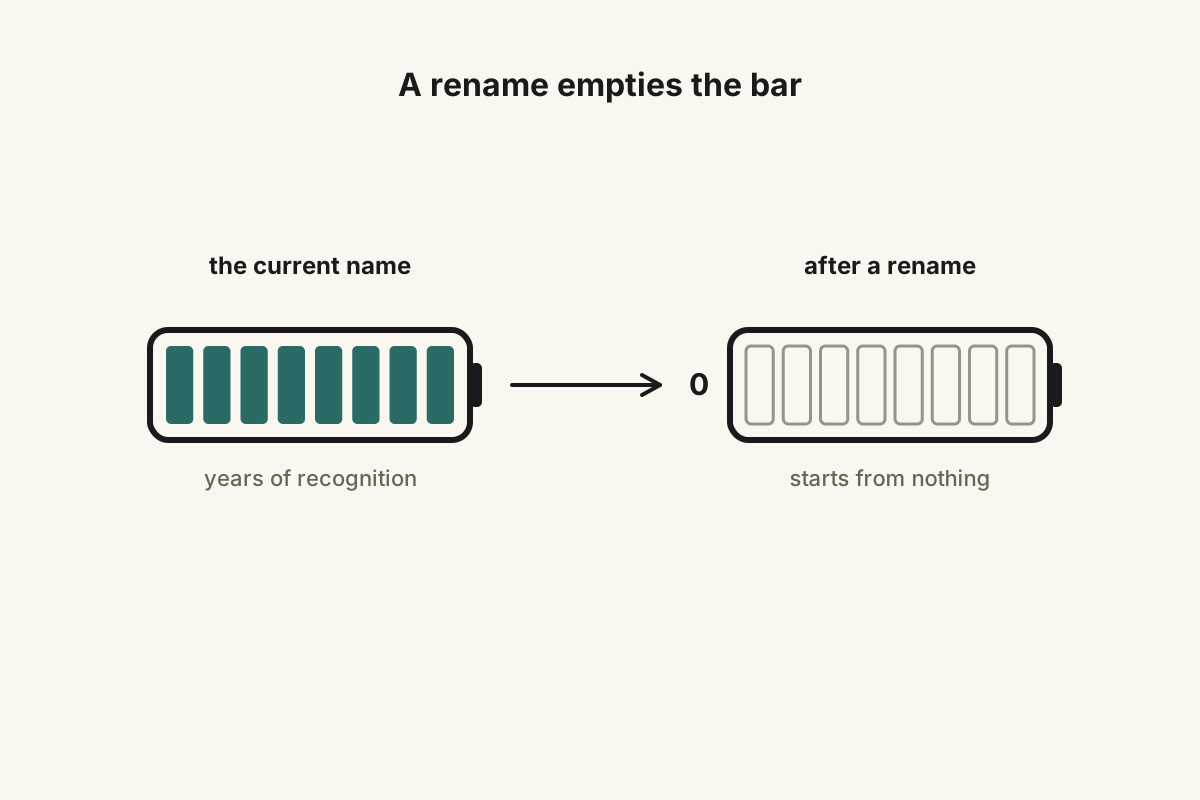
The current name carries years of recognition. A rename empties that bar and the new name starts from nothing.
Renaming is the most expensive decision in naming, because it drops the recognition the current name has already earned. Most names with a flaw are better held and watched than torn out. Whether the right move is to keep it, repair it, or replace it comes down to how much weight the name is now carrying. That trade is what the true cost of naming and the choice between an agency, an AI generator, and a strategist are really about.
Frequently asked questions
Can a good brand name still fail? Yes, and it usually surfaces a year or two after launch rather than on day one. The name is chosen in a room that already knows the company and wants it to win. The forces that break it, strangers saying it aloud, rivals crowding it, a trademark worth fighting over, only arrive once the name is in the market.
What is the most common way a brand name fails? Vanishing in a lineup, because most names are drawn from the same shallow word pool and end up sounding like their neighbors. The damage reads as weak recall rather than dislike, since the buyer likes the name alone but reaches for a competitor when several sit side by side. The cheapest test is the swap, putting your name on a rival's product to see whether anyone would notice the difference.
How do you know if a brand name will hit a trademark problem later? The warning sign is a name cleared on nothing but a search engine and a domain registrar. Those catch exact matches only, so a phonetic near-match or a registration in an adjacent class can sit undetected until the name is worth challenging. A trademark attorney owns the final call, but the free public registers let a founder rule out the obvious collisions first.
Can current events ruin a brand name? Yes, and it's the one mode largely outside a founder's control, because nothing about the word has to change, only how the public reads it. The more a name leans on a single common or loaded word, the more surface it hands the world to write over. A coined name that owns its meaning has almost nothing to repossess, which is the practical case for inventing a name over borrowing one.
Should you rename a brand that has one of these problems? Not by default. A rename resets recognition to zero, so the equity the current name has banked is the first thing you spend. The test is weight, how much legal, financial, or competitive risk the name is actually carrying. Most flawed names clear that bar comfortably enough to be kept and repaired rather than replaced.
Why do most brand renames actually happen? Most renames are strategic, not repairs for a broken name. Mergers collapse two identities into one, growth outpaces a name that boxed the brand into a single product or region, and a once-neutral association can turn toxic. The four modes in this post are the narrower, avoidable set where the name itself is what broke.
BrandNames reads a founder's shortlist against the same four failure modes before a name ships, so the break shows up on a slide instead of in the market. The doors open soon. Leave your email for one note when they do.